Dear Daughter,
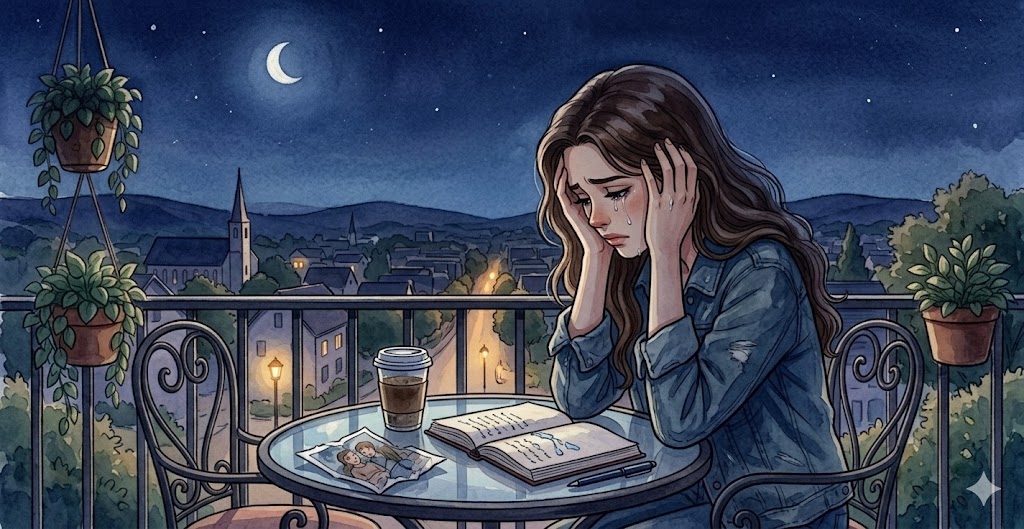
In my last letter, I wrote about what love looks like. Today I want to write about its shadow – heartbreak. I hope you never need this letter. But since no one can predict anything, I want you to have it. Something to reach for at two in the morning, when the world feels very quiet and the ache feels very loud.
Why relationships end
When we are in love, we notice all the light. Then, gradually, we begin to notice other things – things we might not like. And there comes a point where we either cannot tolerate them, or we should not. Most breakups live in that third place.
If you look closely, most endings fall into one of a few shapes: two people want different things from life; trust is broken through infidelity; or the more deeply you know someone, the more clearly you see that your wavelengths simply do not match. Sometimes distance quietly does what words cannot.
Your generation is navigating this differently from mine. Women today are educated, financially independent, and unwilling to simply absorb what doesn’t work – and that is a good and necessary change, after generations of silence. But I want to say one small thing: adjustment and compromise are not the same word. In any honest relationship, some adjustment is always required. In beautiful ones, people even compromise – but only when it flows from both sides. The art is in knowing when staying is an act of love, and when leaving is an act of self-respect. That judgement is one of the hardest you will ever make.
You are allowed to grieve
Coming back to heartbreak, it is real. It is not an overreaction, not teenage melodrama, not something to be tidied away by the weekend. There is actual science showing that the brain processes the end of a significant relationship similarly to physical pain. What you feel is not embarrassing. It is human. It is, in its own strange way, proof that something mattered.
The world will be impatient with your sadness. People – even the ones who love you most – will say things like you will find someone better or time heals everything or you are young, don’t worry. They mean well. But these things, however true in the long run, are not useful at two in the morning when you are replaying a conversation you cannot stop thinking about.
You do not have to be fine quickly. You do not have to perform recovery for anyone’s comfort.
What you do have to do – gently, gradually, without rushing – is feel it. Because grief that is not allowed to move through you does not disappear. It settles. It hardens. It shows up later in ways you do not expect.
Cry if you need to cry. Cancel the plans if you need a day. Eat what comforts you, watch what soothes you, let your friends sit with you in the quiet. This is not weakness. This is how human beings mend. Grief has no schedule.
And please, do not try to carry this alone. Reach out to your core – us, a friend, anyone who feels like the right person in that moment. You do not have to perform strength for anyone, but you also do not have to sit in the dark by yourself.
Find your shape again
When you are in a relationship, especially for the first time, it is very easy to let it become the primary story of your days. Your plans revolve around it. Your mood is shaped by it. The way you see yourself is partly reflected through another person’s eyes.
When that ends, you do not just lose the relationship. You lose the version of your routine, your future, your identity that had been built around it. That is why heartbreak is so disorienting – it is not only about the person. It is about the shape your life had taken.
The work, then, is to find your shape again. Or perhaps to find a new one.
Go back to the things that were yours before. The interests you set aside. The friendships you let drift. The version of yourself that existed before this person entered the picture – go find her. She has been waiting, patiently, and she is not gone.
Try something new. Not as a distraction, but as an act of reclaiming your own time, your own curiosity, your own future. You will discover, slowly, that your days can be full and interesting and entirely yours – without being built around someone else.
One more thing, and I say this with all the gentleness I have: if the sadness ever starts to feel like something heavier – if it edges toward darkness, toward thoughts that frighten you – please seek help from a professional. There is no shame in that. It is, in fact, one of the bravest things a person can do.
Do not carry the bitterness
When something ends badly – especially if you were not the one who chose the ending, or if trust was broken, or if you were treated in ways you did not deserve – it is natural to feel angry. Let yourself feel it. Anger, in the right proportion, is part of healing.
But there is a version of anger that overstays its welcome. That turns, over time, into bitterness. And bitterness is a particular kind of weight – it feels like armour, but it is actually a cage.
When you carry bitterness into the next chapter of your life, it does not punish the person who hurt you. It travels with you. It colours how you see the next person, and the one after that. It makes you smaller than you are. It makes trust feel like foolishness and openness feel like risk.
The person who hurt you does not deserve that much space in your future.
Forgiving someone – and I mean this in the quiet, private sense, not the performative kind – does not mean what they did was acceptable. It does not mean you have to remain in their life, or speak to them, or pretend it didn’t happen. It simply means you have decided not to let it govern you. That is something you do entirely for yourself.
You are allowed to close a chapter cleanly. To say: that happened, it hurt, I learnt something, and now I am walking forward.
How you will know you are healing
You will know you are moving on – not when you stop thinking about them, but when you start thinking about yourself more. When the future begins to feel like possibility again rather than loss. When a good day arrives that has nothing to do with them, and you realise, almost by accident, that you are fine.
When the thought of them no longer sits at the centre of everything – when it moves to the edge, and eventually to the background, and eventually you have to make an effort to remember what the ache even felt like.
That is not forgetting. That is healing.
There is no correct timeline for any of it. Do not measure your recovery against anyone else’s. Do not let anyone tell you that you are taking too long, or that you should be over it by now. And equally – do not let yourself stay inside the sadness indefinitely, using it as shelter from the risk of being open again.
Life is not a story about one person. It has many chapters. Some of the best ones are still ahead of you, unwritten, waiting.
The right person – when they come – will not need you to have forgotten everyone who came before. They will simply be glad you are still here, still open, still yourself.
And so will I.
With all my love, always
Mumma

 ReflectionsOfPratibha
Would love to know your thoughts!